

"Separate Tables" by Terence Rattigan, directed Beth Duce 23-26 April 2025
Our April 2024 production completed its run with near-capacity audiences for all four nights of the play. Huge thanks to our loyal patrons once again, and to all those who made it happen, most of all our Director, Beth Duce, who worked tirelessly as she always does on every aspect of the show and whose passion and inspiration brought the whole thing to life. Please see below for some pictures that provide a record, along with reviews and audience reaction as they come in.

Separate Tables by Terence Rattigan consists of two linked one-act plays, Table by the Window and Table Number Seven, both taking place in the rather shabby but quietly genteel “Beauregard Private Hotel” (which we are setting in Scarborough) where most of the guests are permanent residents.
The two plays follow the drama, humour and intrigue woven into the lives of various residents over an 18 month period. As a result, the otherwise lonely and dull existences of the majority of the elderly residents are enlivened, if not enriched, by the antics of some of the other guests.
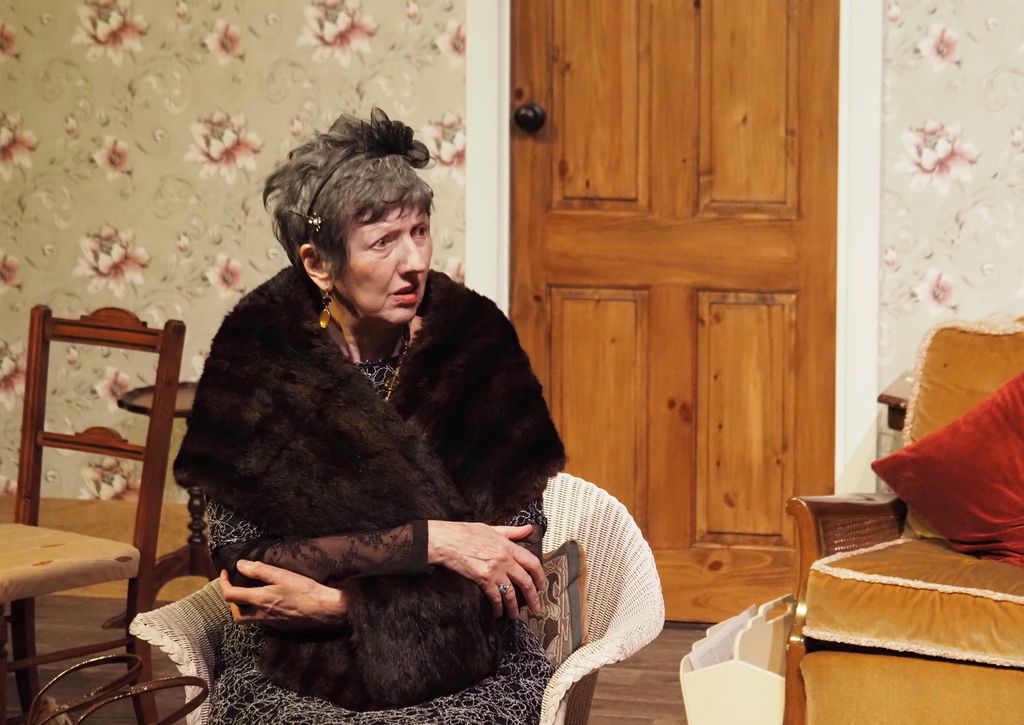
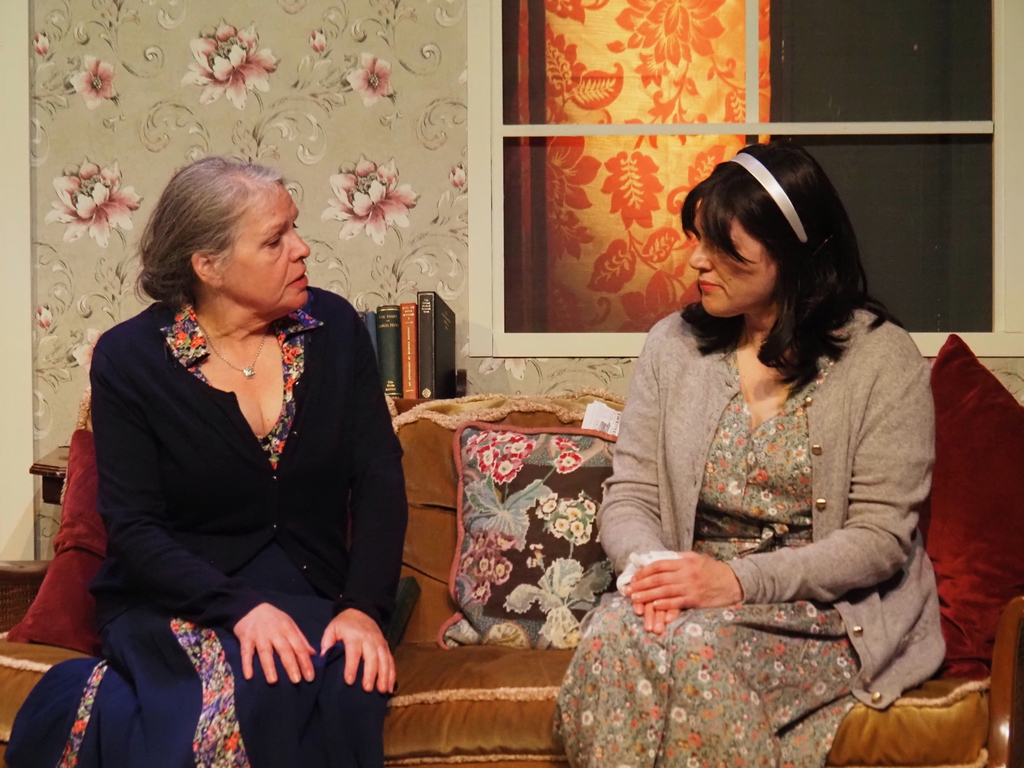
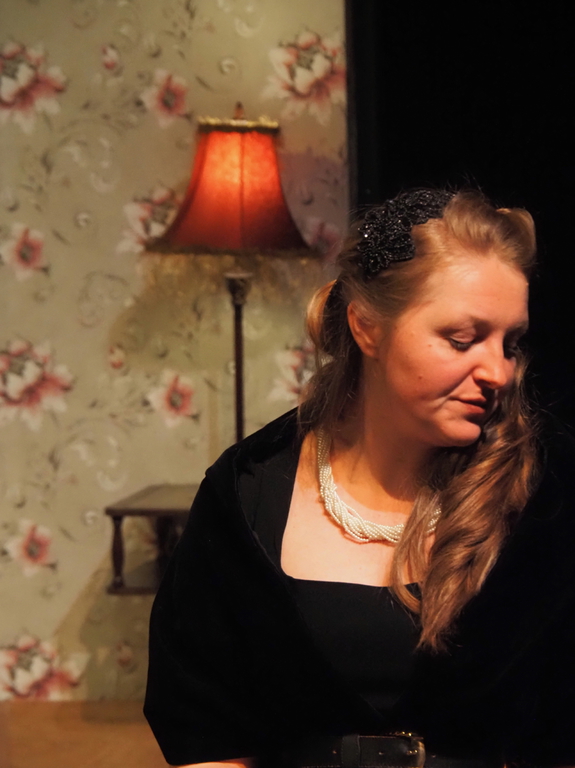
Production stills for "Separate Tables"
 Janet Porter as Lady Matheson
 Anne Bush as Mrs Railton-Bell
 Vivienne Bate as Miss Meacham
 David Pritchard as Mr Fowler
 Beth Kilburn as Mrs Shankland
 Julie Kilburn as Miss Cooper
 Gavin Jones as Mr Malcolm
 Will Andrews as Charles Stratton
 Katy Risbridger as Jean Stratton (nee Tanner)
 Rob Colbeck as Major Pollock
 Hazel Walshaw as Miss Railton-Bell
 Ron Darby and Dianne Newby as Joe and Mabel
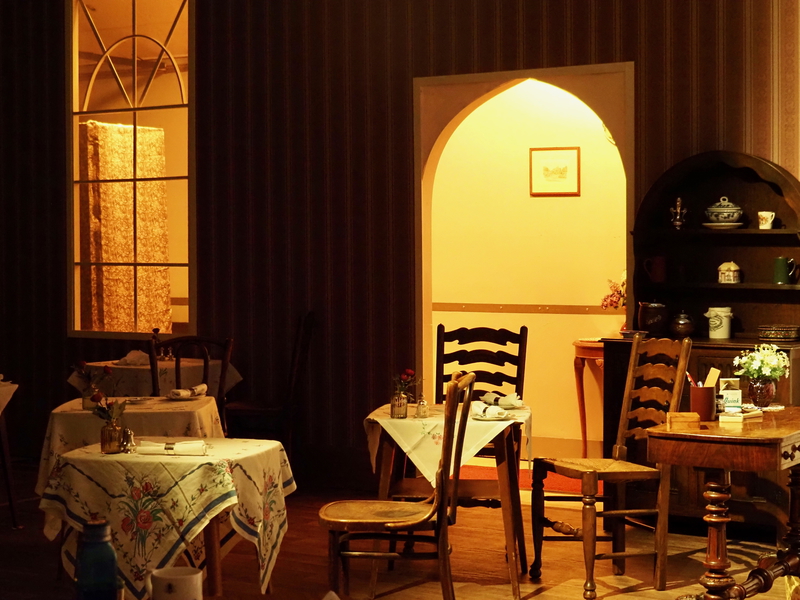
 And the set...










Review of "Separate Tables"
Our thanks to Anne Lightman for this thoughtful appreciation of our last show:
This Adel Players production was “in the round” (or maybe oblong!). This meant that the audience were close to the action - almost involved rather than observing. The large set was impressive – two “rooms” in a private hotel in Scarborough – the dining room and lounge, with a view into the back corridor to the office and an exit into the garden. The first half was set in 1954, an era remembered through the medium of TV at least. Congratulations to the set designers, sound effects and all involved as it was a convincing setting for the drama.
The dining room was opening for dinner and as the guests took their places, we noted that they were mostly female with furs much in evidence, and all but two were elderly. Another guest was introduced – a middle-aged woman smartly dressed in fashionable clothes – no furs. We learn later she was a former model. The conversation in the dining room enabled their characters to emerge and showed how each coped with getting old, being lonely and in straitened circumstances. These insightful observations on human behaviour could have been sad, but the pace and an unfolding dramatic storyline meant it wasn’t. We watched the effect of the new guest on the others, particularly on a male guest, who it transpired, was a former husband she had tracked. After an acrimonious and enlightening conversation, he disappeared and reappeared next morning in the lounge, exceedingly drunk. This led to further revelations and a dramatic turn of events – demonstrating the destructive power of love.
For the second half we were back to the same hotel but eighteen months later. The warring couple were absent, the hotel staff were unchanged – a put-upon waitress and a very charming, wise, female hotelier and the two young people were now a married couple with baby (a very realistic, if quiet, one). Two other guests had appeared – an army Major and the daughter of one of the elderly female guests. Much of the action in this half took place in the lounge – and basically centred around the unmasking of the Major as a fraud and sexual predator and how it was dealt with. But there were other issues explored too – the effect of a dominant woman on her daughter was one. This doesn’t sound as if there was much room for humour, but there was plenty, which lightened the tension and relaxed the audience.
I thought it a wonderful play – allowing us to observe and have a greater understanding of some aspects of human behaviour via a performance rather than life and suggesting we should not jump to conclusions and judgement. A valuable lesson! The Adel Players did the play full justice, with superb performances from cast of twelve – quite some achievement. Most parts required were demanding verbally (some physically) and it is testimony to their performances and production, that we were quite shocked when we realised that it had kept us engrossed for the best part of three hours (less the interval).
Ann Lightman


 Print
